SoundMap
A music discovery concept for Spotify · UX case study · 2023
Spotify is great for playing music. It's not great for discovering it socially. Algorithmic recommendations feel impersonal, and they miss something obvious: location, friends, and the music people are actually playing around you.
SoundMap is a feature concept I designed to bring those things in. The full writeup lives on Medium. Quick version below.
The idea
Two layers: music plus location. You see what's playing around you on a map, share a song in one tap, and find the local indie scene wherever you are.
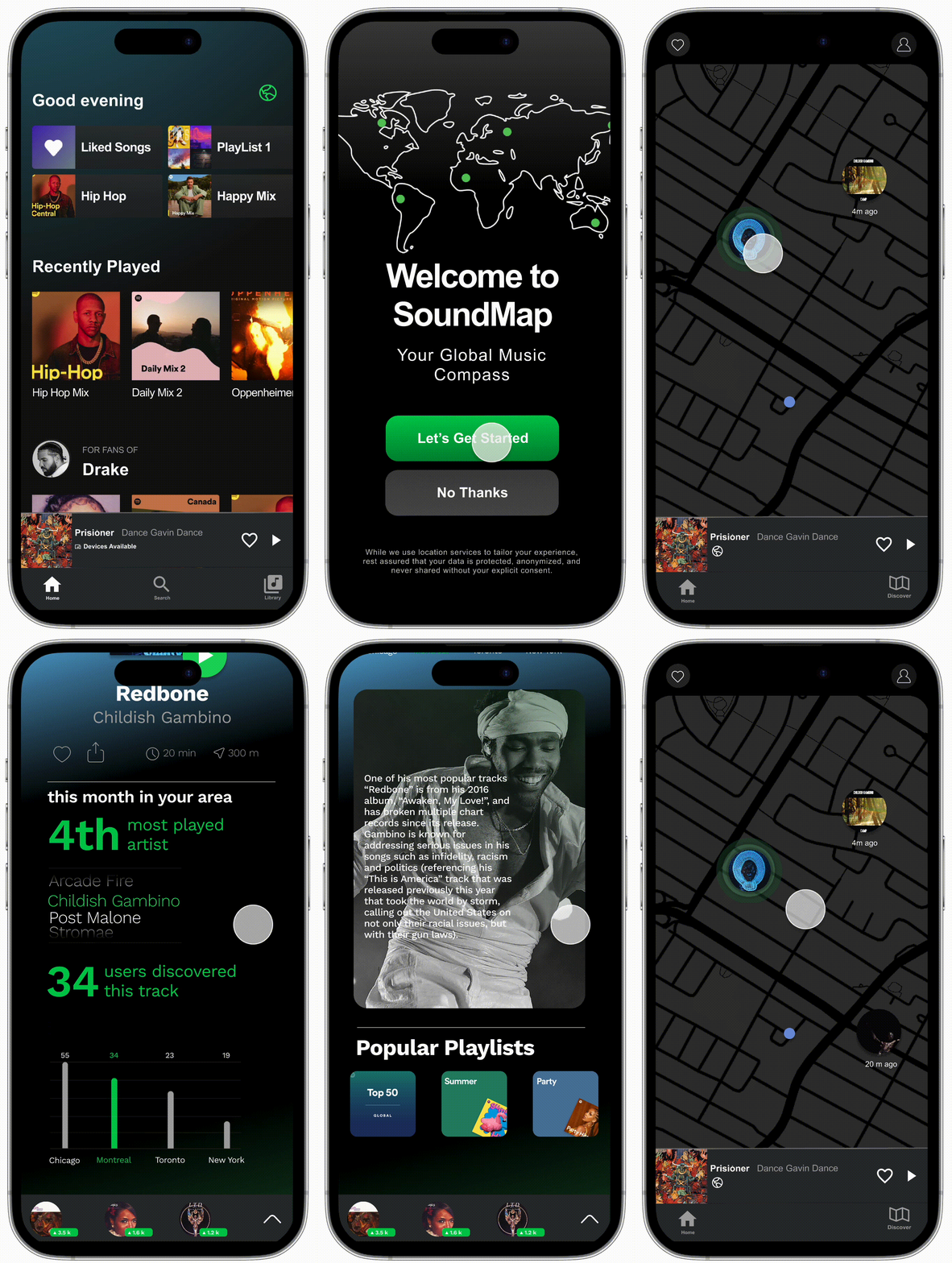
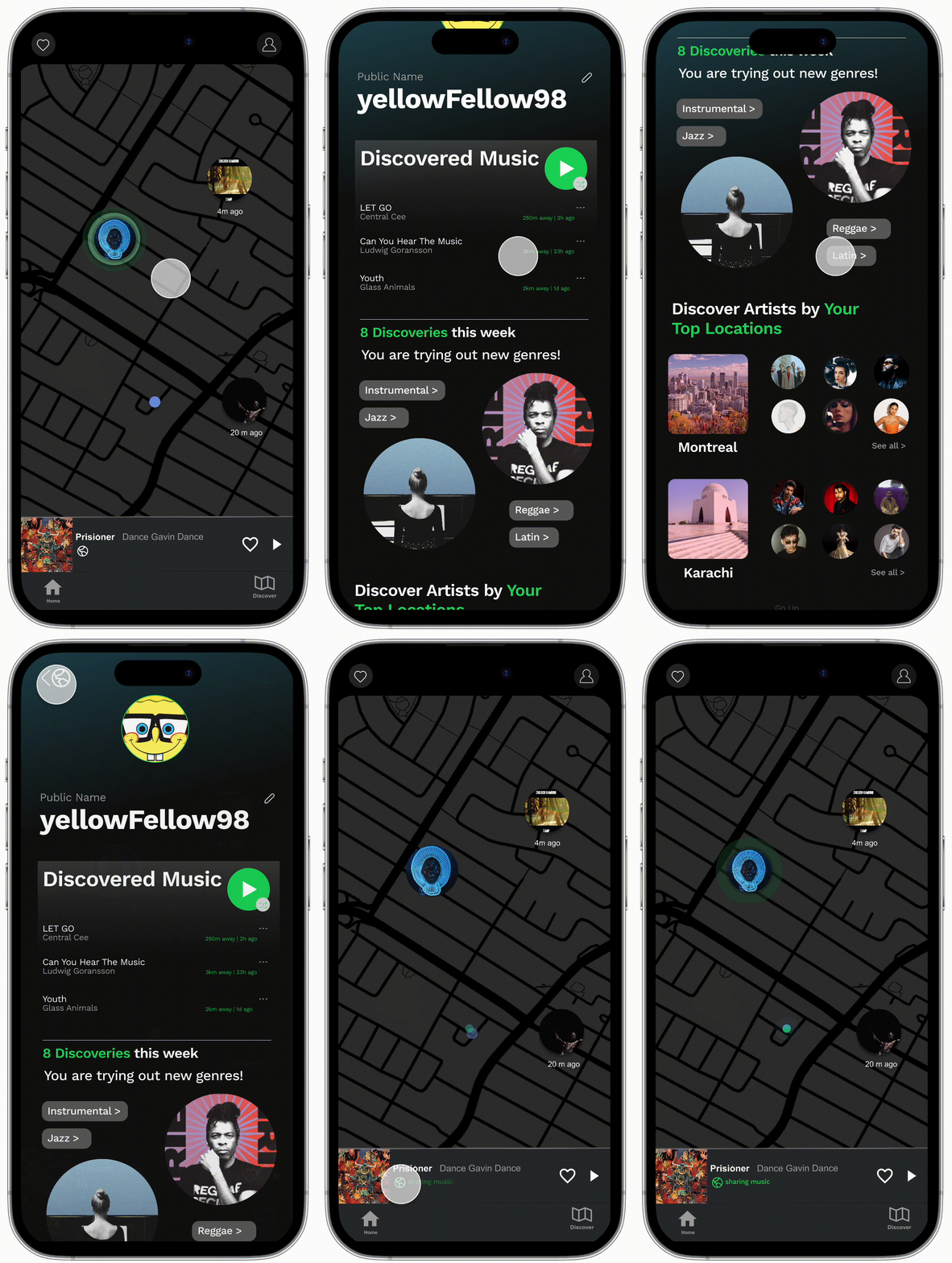
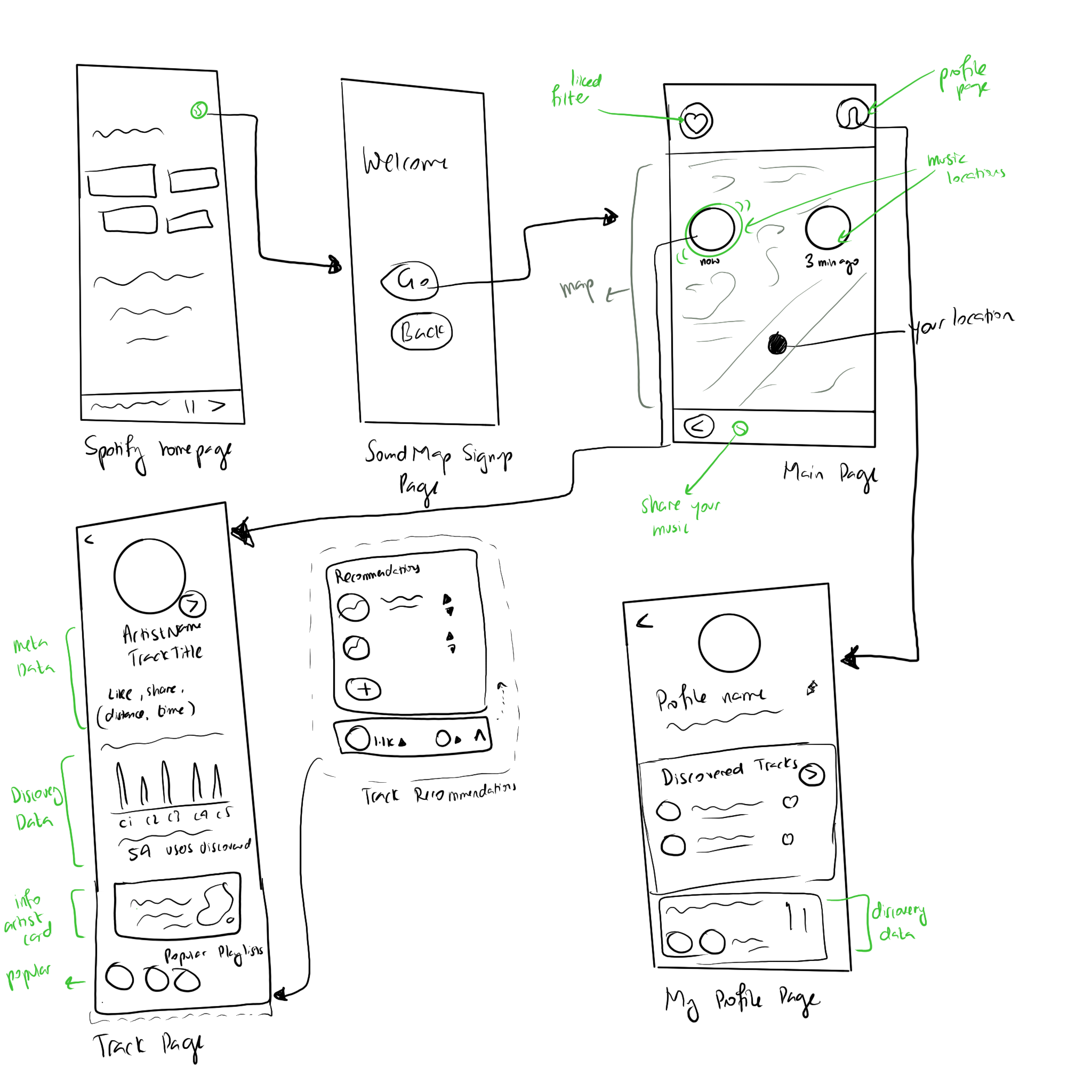
Sketches and flow
I started with three user types: Explorers (looking for new music), Suggesters (love sharing what they find), and Artists. Then I sketched how someone would get from Spotify's home screen into the feature without breaking the existing flow.
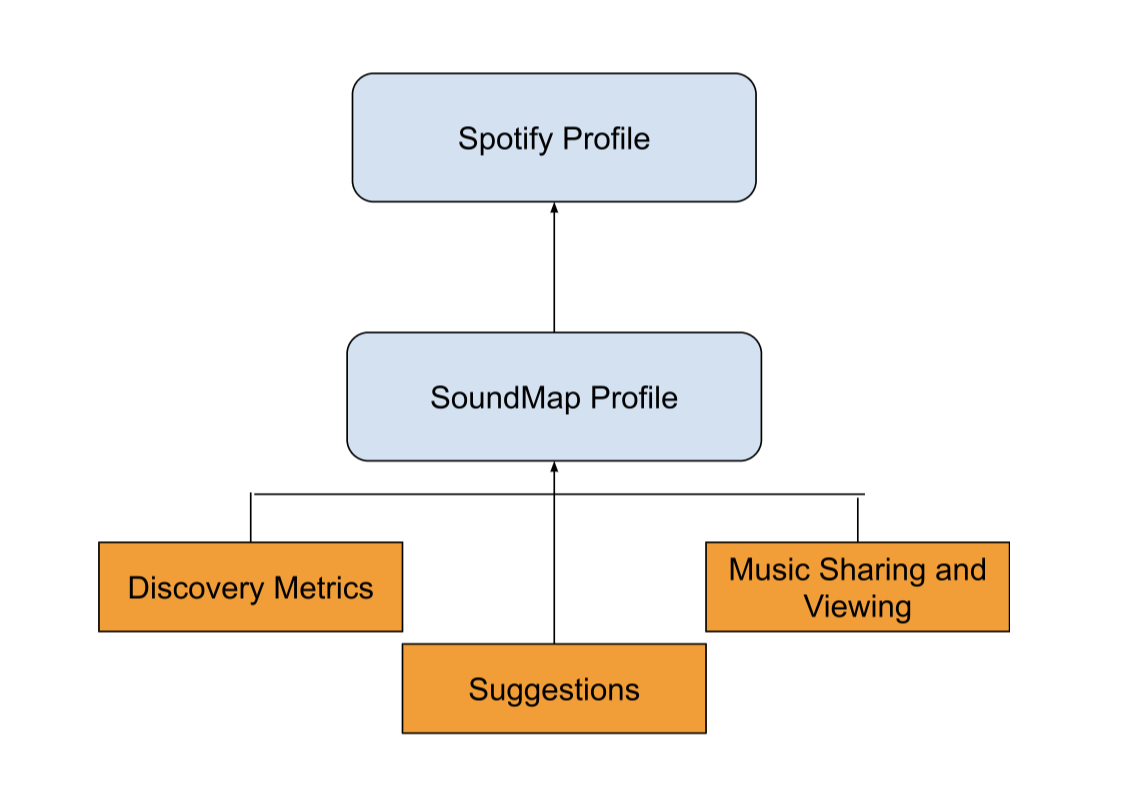
Key features
Exclusively new tunes. Filter out songs you've already heard so the map only surfaces what's actually new for you.
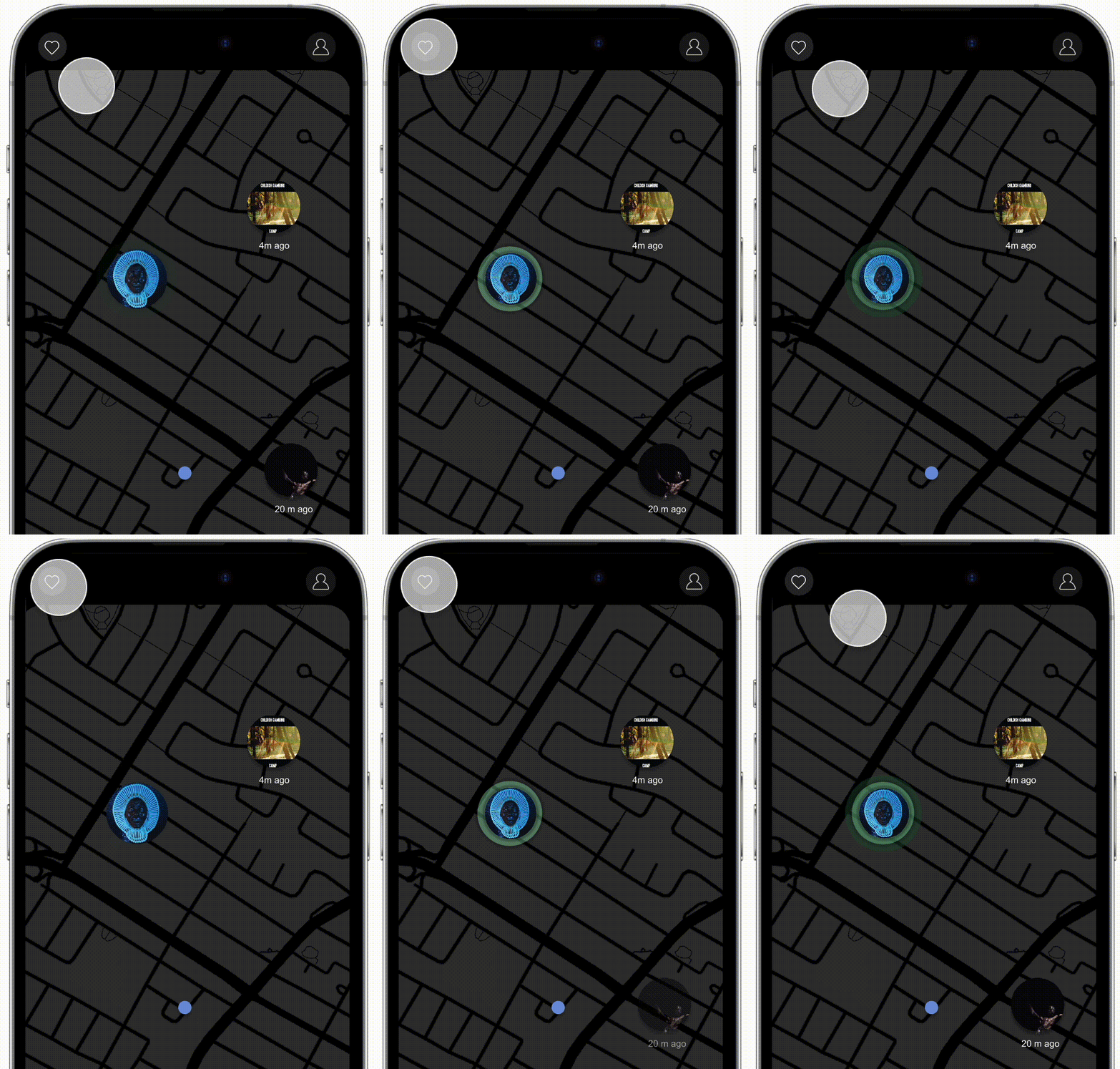
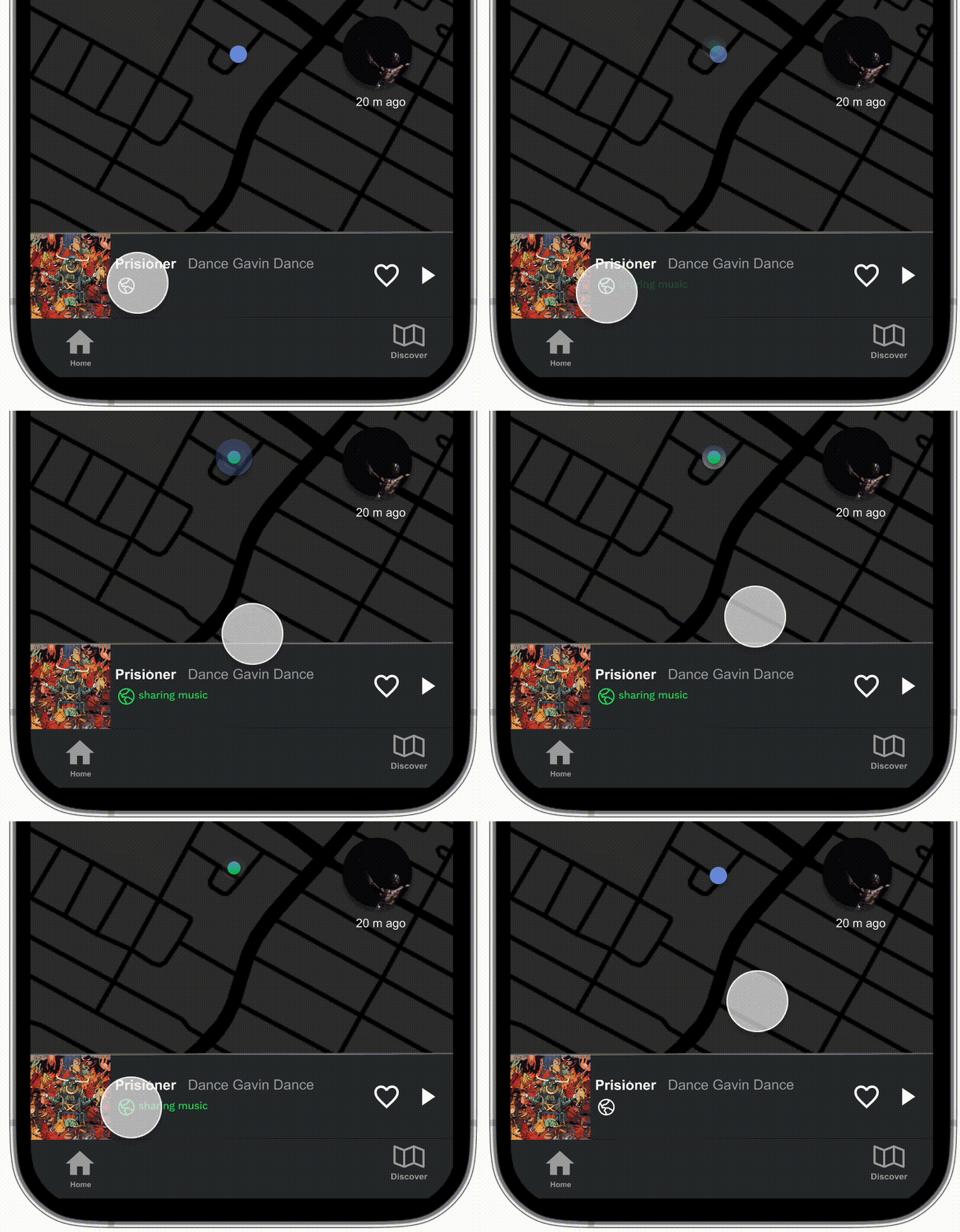
One tap sharing. Broadcast what you're listening to with a single click.
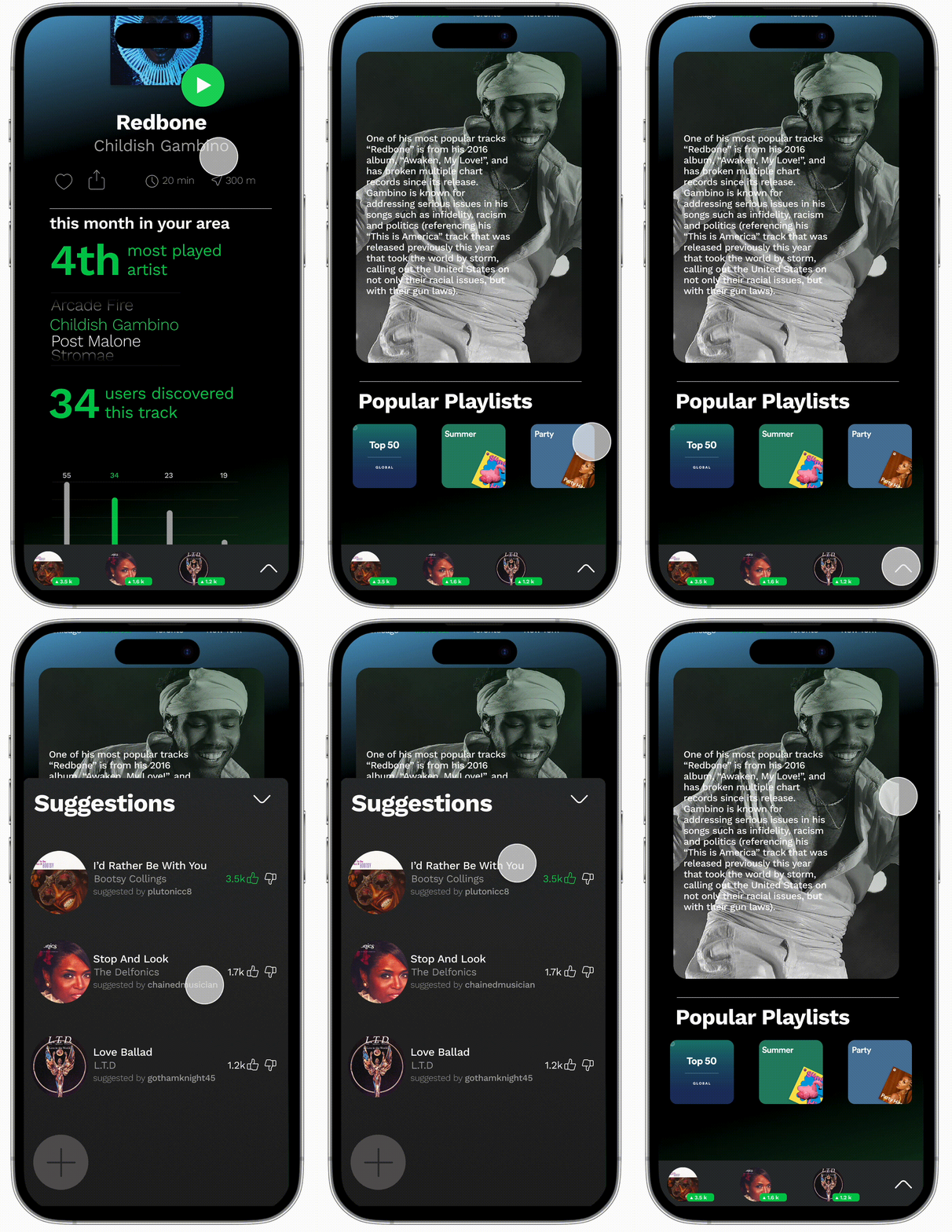
A personal touch. Drop your favorite songs on the map for others to find. Upvotes and downvotes for community curation.
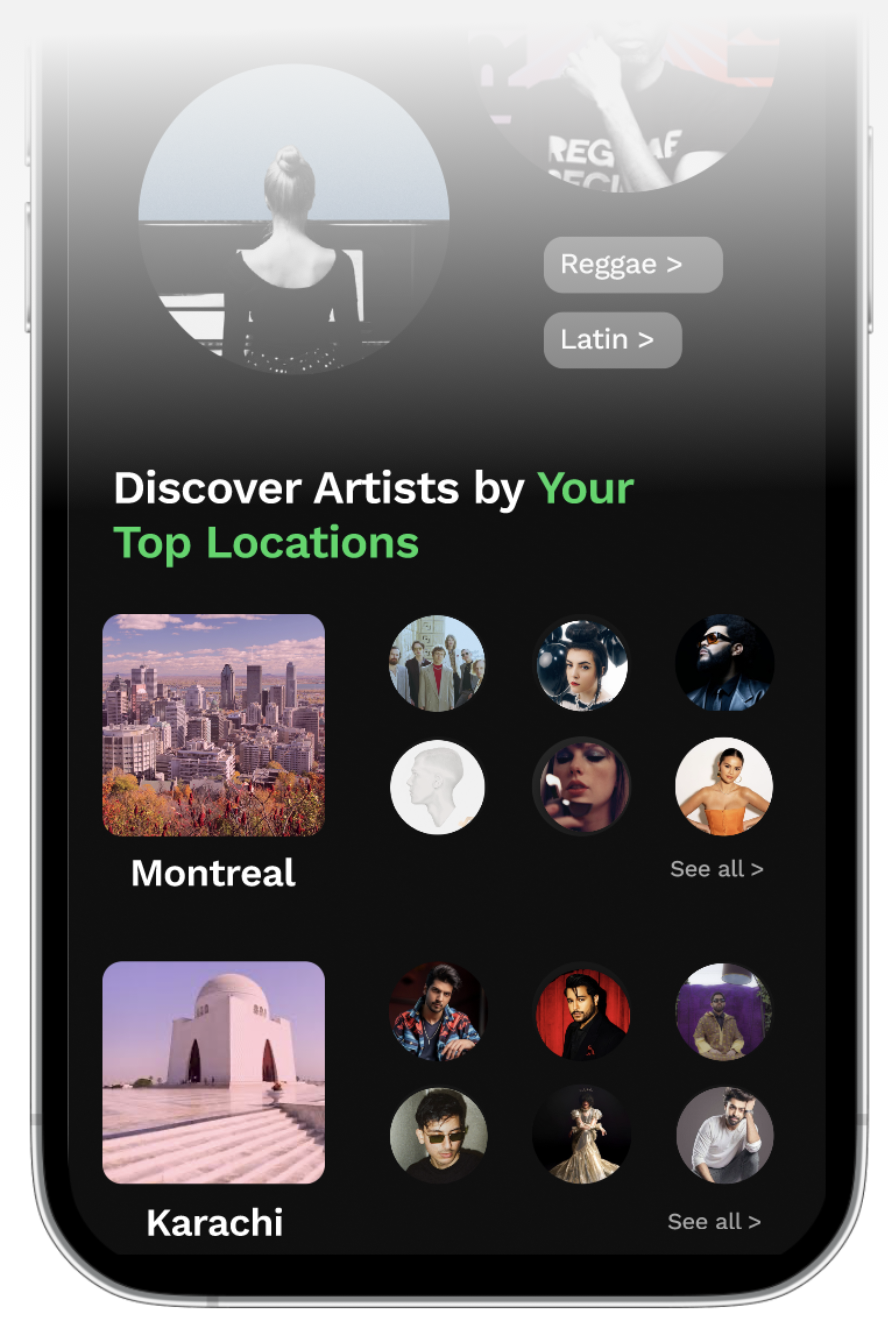
Cultural melodies. Each city gets a discovery page tuned to its local indie scene, built on top of existing recommendation data and SoundMap activity.
What I learned
Users found the interface intuitive overall, but the world icon for broadcasting wasn't obvious enough. Privacy came up too. I'd address it by capping the map zoom so exact locations stay private. Adding a social layer to discovery feels like a real gap in Spotify today, and a fun one to fill.